Demand-Side Subsidies (DSS) Component
EnDev closes the affordability gap for renewable electricity and cooking technologies through the Demand-Side Subsidies (DSS) component. Funded by the Directorate-General for International Cooperation (DGIS) of the Netherlands Ministry of Foreign Affairs, the component enables low-income and displaced populations to sustainably improve their lives and livelihoods in Liberia, Malawi, Niger, and Uganda.
Technologies used in this project
- Higher-tier cookstoves
- Improved cookstoves
- Stand-alone systems
Country data
- Countries Liberia, Malawi, Niger, Uganda
- Technologies Off-grid solar products and/or cooking technologies
- Project period 08/2022 – 12/2026
- Budget EUR 20,000,000
- Co-financed by Directorate-General for International Cooperation (DGIS) of the Netherlands Ministry of Foreign Affairs
- Coordinated and implemented by Deutsche Gesellschaft für Internationale Zusammenarbeit (GIZ) GmbH, Netherlands Enterprise Agency (RVO)
-
Projected results
Energy access for up to 500.000
vulnerable people
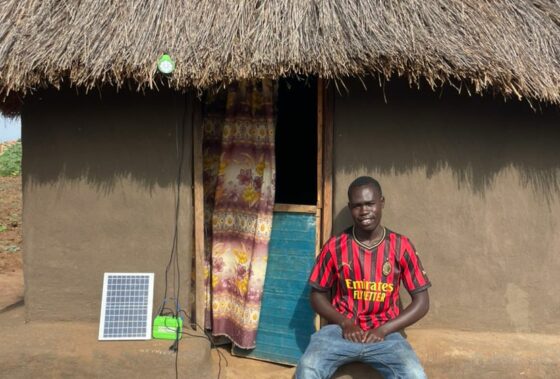
From candlelight to solar power in Liberia: Kebbah boosts education and grows her business

Leave no one behind on the road to SDG 7
Energy access is central to both achieving the 2030 Sustainable Development Goals and the Paris Agreement on Climate Change. While significant progress has been made towards fulfilling SDG 7, millions remain unable to afford even the most basic energy products. Demand-Side Subsidies (DSS) address this affordability gap and ensure that no one is left behind.
DSS reduce the price of energy products for customers without eliminating the price completely, thereby improving affordability while ensuring ownership. These subsidies can be delivered directly to consumers via cash transfers or vouchers, or channelled through companies via results-based financing (RBF) or other schemes that include a mandatory price reduction.
DSS mechanisms, when well-designed, complement and bolster other interventions. While practical experience with DSS for off-grid energy access has grown in recent years, further evidence is still needed on how to design and deliver them effectively at scale, particularly for prioritising those furthest left behind.
Key principles
Under the new DSS component, EnDev seeks to contribute to the global body of knowledge on DSS by developing and piloting innovative mechanisms and facilitate access to energy. The pilots focus on DSS schemes for low-income and/or displaced populations who are currently unable to access commercial off-grid solar and cooking markets. The component operates in four countries in Sub-Saharan Africa: Liberia, Malawi, Niger, and Uganda.
While each pilot explores different interventions for delivering DSS, all are based on the following core principles:
- The development and implementation of the DSS schemes are tailored to the target groups’ context and ability to pay as well asto the level of local market development.
- All DSS schemes are designed to minimise or avoid market distortion and align with EnDev’s cost-efficient, market-based approach.
- Effective monitoring and verification systems are used to minimise financial risk and reduce the pootential for fraud or abuse.
- Co-creation and co-implementation are pursued to leverage additional funds, promote alignment and learning between programmes, and support scale-up.
Strategic Partnerships for Learning and Scale
Identifying potential for leveraging funds and scaling successful pilots is a central part of the programme. This involves working closely with government and the World Bank from the outset to secure buy-in, leverage additional funds, and build capacities necessary for scale-up. In addition, the overarching aim of the component is to promote global learning and knowledge-sharing for future replication at scale. In pursuing this goal, EnDev will collaborate closely and share lessons learned with ESMAP and the End-User Subsidy Lab to enable stakeholders to design smart and effective DSS in the future.
Impact
By providing new models for DSS schemes the programme will:
1. Directly enable up to 500.000 vulnerable people to have access to modern energy services, depending on end-users being targeted and technologies supported.
2. Indirectly contribute to providing energy access for millions more through scale-up and replication.
For more details, download our factsheets:
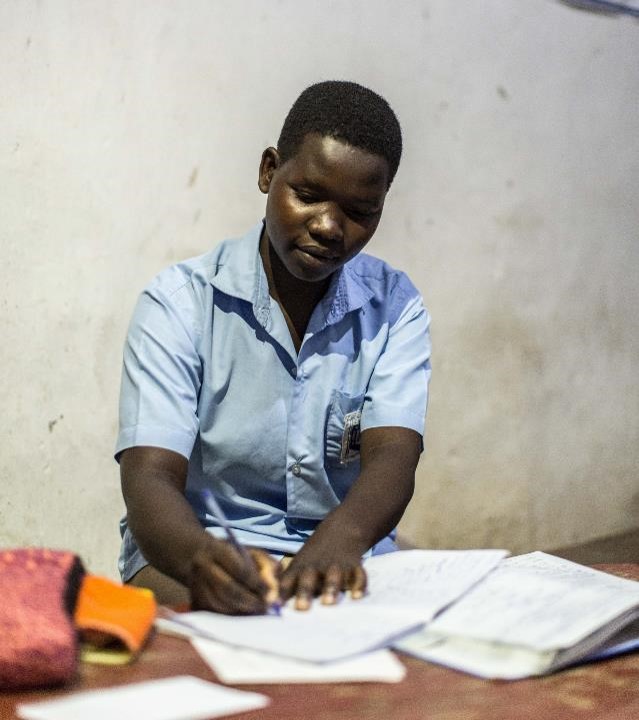
“The power is just always there. Even in the middle of the night, I can wake up and study without worrying about light.”