Liberia
Between 2012 and 2026, Energising Development Liberia facilitated access to modern energy services in Liberia, one of the world’s most challenging energy contexts. Following the unbundling of the former multi-country approach including also Sierra Leone and Guinea in 2023, EnDev Liberia focused on clean cooking market development, the electrification of remote health facilities, and pro-poor subsidy models advancing the ‘Leave No One Behind’ approach. Today, electricity access in Liberia stands at 33%, while the clean cooking market is still at a very nascent stage (approx. 1% access).
Technologies used in this project
- Improved cookstoves
- Stand-alone systems
Country data
- People with access to electricity: 39,700*
- People with access to improved cooking: 5,420*
- SIs with access to modern energy services: 191*
- SME’s with access to modern energy services 3*
- * Target achievements 2023-2026
Approach
EnDev Liberia develops markets for solar systems and improved cookstoves while supporting health and educational facilities. Working closely with the Ministry of Mines and Energy (MME) and the Rural and Renewable Energy Agency (RREA), EnDev focuses on reaching the poorest and most vulnerable communities, promoting gender equality, and contributing to inclusive growth and environmental sustainability.
A key pillar of EnDev’s approach in Liberia is the Demand-Side Subsidy (DSS) pilot, which lowers the cost of solar home systems (SHS) for low-income households, making clean electricity more affordable. The DSS program is managed by BRAC Liberia and targets vulnerable populations to accelerate energy access.
In the clean cooking sector, EnDev supports both household and institutional use of improved cookstoves (ICS). To strengthen institutional cooking solutions, EnDev organized a technical ‘stove camp’ workshop for local producers, leading to the development of two institutional stove prototypes. These have been refined for series production and the first units were delivered to Careysburg Elementary School through a partnership with the World Food Programme. Over 100 schools in food-insecure communities will receive improved stoves, ensuring cleaner cooking solutions reach underserved areas and align with the “leave no one behind” commitment.
For household cooking, EnDev works with artisanal and semi-industrial producers to build technical capacity and improve stove production quality. Companies have received support such as upgraded tools and awareness-raising campaigns to promote cleaner cooking.
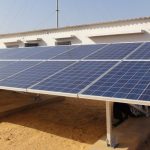
In health, EnDev Liberia’s Energising Health initiative has electrified nearly 300 health facilities with solar lighting and solar direct-drive (SDD) vaccine refrigerators, ensuring that vaccines reach last-mile patients in remote areas. This program is implemented with funding from the German Federal Ministry for Economic Cooperation and Development (BMZ) and coordinated closely with Liberia’s Ministry of Health and RREA.
Through these integrated efforts across energy access, cooking technologies, and health facility electrification, EnDev Liberia advances sustainable energy solutions targeted at vulnerable populations and critical sectors.
Learn more about EnDev’s approach
Energy Access through Demand-Side Subsidies
Funded by the Directorate-General for International Cooperation (DGIS) of the Netherlands Ministry of Foreign Affairs, EnDev’s Energy Access through Demand-Side Subsidies component seeks to develop and pilot Demand Side Subsidy (DSS) mechanisms to facilitate access to modern energy services for vulnerable populations who are currently unable to access commercial off-grid solar and cooking markets.
In Liberia, the DSS pilot aims to enable access to quality off-grid solar products and foster market expansion in vulnerable, hard-to-reach counties. DSS will be conducted through a jointly-implemented RBF facility in partnership with the Government of Liberia’s Rural and Renewable Energy Agency (RREA) and the World Bank.
Impact
EnDev established a resilient foundation for long-term energy access by strengthening local supply chains, enhancing technical skill sets, and pioneering inclusive delivery models. By focusing on the professionalisation of local solar enterprises and cookstove producers, the project ensured that market actors possessed the capacity to continue service provision and adapt to evolving market dynamics. On the demand side, user awareness and product knowledge have increased substantially.
Generally, the project reinforced the enabling environment by aligning with national steering mechanisms and supporting the establishment of norms and technical certifications.
Government incentives, such as duty waivers, signalled a strong institutional commitment. Crucially, the project’s findings provided the evidence base for scale-ups by the Rural and Renewable Energy Agency and the World Bank, shaping forthcoming national electrification initiatives.
Together, these supply, demand, and policy developments demonstrate systemic impact and progress toward a resilient, inclusive market – while continued support is necessary
to transition from a pioneering phase to a fully sustainable commercial ecosystem.
Observations and Lessons Learned
In Liberia’s emerging energy market, demand-side subsidies alone were insufficient for solar access. Success required a comprehensive approach including both demand-side and supply-side support and coaching to support local firms in scaling their operations. Adaptive management proved essential. Adjusting subsidy levels and geographical scope helped the project respond to evolving market realities while ensuring affordability for vulnerable groups.
A central achievement was the joint delivery architecture built with the World Bank. A unified platform for claims processing significantly reduced transaction costs. These evidence-based lessons provide a proven framework for future national energy initiatives.
For clean cooking, supporting the development of local actors is vital for long-term sustainability. Strengthening technical and business skills ensures local firms can maintain service provision independently. High-visibility activities help increase community engagement and awareness of modern energy solutions.