Scaling Climate-friendly Cooking: Project Demonstrates Climate Mitigation and Energy Access Go Hand in Hand

Market-based approaches accelerate access to climate-friendly cooking, and the increased usage of low-emission cookstoves contributes to reducing greenhouse gas emissions. The “Promotion of Climate-Friendly Cooking in Kenya and Senegal” demonstrated that successfully. After five years of implementation, more than 23.6 million people are using efficient, low-emission cookstoves, and 5.7 million tonnes of CO₂ equivalent had been avoided by the end of the project. The project exceeded its targets and provided a model that can be replicated in other countries.
The “Promotion of Climate-Friendly Cooking” project was implemented from 2020 to 2026 in Kenya and Senegal. Commissioned by the German Federal Ministry for Economic Cooperation and Development (BMZ) and co-financed by the Green Climate Fund (GCF), the project was implemented by the Deutsche Gesellschaft für Internationale Zusammenarbeit (GIZ) in partnership with Energising Development (EnDev). Its objective was to transform the clean cooking market by strengthening improved cookstove enterprises, expanding access to climate-friendly cooking solutions, and contributing to greenhouse gas emission reductions.
Delivering on and beyond targets
The project not only achieved its targets but exceeded them in several key areas, despite the setback due to the COVID-19 pandemic. This demonstrates the strong potential of market-based approaches to accelerate access to cooking solutions while contributing to climate protection and economic development simultaneously.
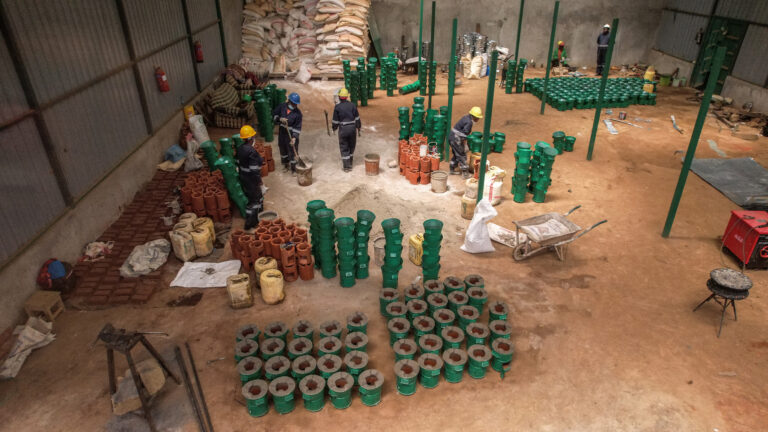
- A total of 23.68 million people gained access to modern energy solutions, more than doubling the original target.
- By 2025, the use of efficient stoves produced with support of the project had already resulted in a reduction of harmful climate emissions of 5.71 million tonnes of CO₂ equivalent. Over the full lifetime of the stoves, these reductions are expected to reach a total of 9.04 million tonnes.
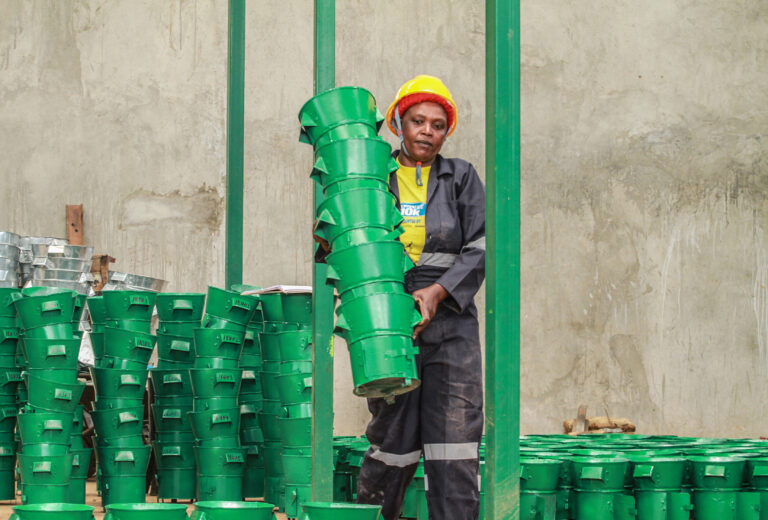
- In Kenya and Senegal, strong progress in the cooking energy sector indicates that Nationally Determined Contributions (NDC) targets are on track: Kenya and Senegal are well positioned to exceed their national emissions reduction targets for the cooking energy sector by 2030.
- At the same time, 3,466 full-time jobs were created across the value chain for improved cookstoves.
“The project ‘Promoting Clean Cooking in Senegal and Kenya’ has truly demonstrated a paradigm shift through the scaling up of improved cookstove use in Senegal.”
Madeleine Diouf Sarr, Director of Climate Change, Ecological Transition and Green Finance, Ministry of Environment and Sustainable Development, Senegal
"Clean cooking is no longer just a social cause—it is a strategic investment. The project has professionalised the value chain, creating a robust ecosystem where private capital and development finance now meet to drive a sustainable, investor-led future."
Dr. Faith Wandera, Director Renewable Energy, Ministry of Energy and Petroleum, Kenya
Made in Africa: Recipe for professionalisation
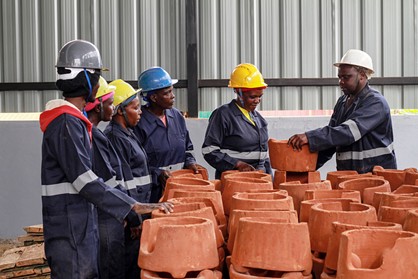
A key driver of this success was the programme’s professionalisation approach, designed to strengthen the capacity and competitiveness of local and national enterprises producing and selling climate-friendly cookstoves.
Through performance-based, targeted support, 156 improved cookstove enterprises in Kenya and Senegal were able to increase productivity. Investments, training, and business coaching enabled them to transition from artisanal production to professional companies and scale and invest in their operations.
Access to finance played a particularly important role. The project facilitated 60 commercial credit agreements, which enabled enterprises to expand production and reach new customer segments.
As a result, the market share of professionalised enterprises now accounts for 95% of all sales in Kenya and 89% in Senegal. This demonstrates how targeted support can catalyse lasting market transformation and thus increase access rates to cleaner cooking solutions and reduce greenhouse gas emissions.
Beyond the numbers: Highlights from five years of implementation


From results to replication
The experience gained over the past five years offers valuable insights into how cooking energy markets can be expanded and how climate mitigation targets can be met simultaneously.
Key elements of the approach, particularly the professionalisation model and the contribution to climate mitigation, are already being considered for replication in several African countries by other initiatives. The experiences from Kenya and Senegal are, for example, incorporated into EnDev’s programming for 2026 and beyond.
“For me, this project shows what is possible when strong local businesses and the right support come together. Seeing clean cooking grow into a real market is incredibly encouraging—and I am convinced that this approach can scale far beyond Kenya and Senegal.”
Alexander Haack, Project Lead, Deutsche Gesellschaft für Internationale Zusammenarbeit (GIZ)

