
A Model for Change: Pioneering Smoke-Free Kitchens for Schools Across Rwanda
How the Kabuga Catholic School’s shift to cleaner cooking is protecting health, cutting emissions, and setting a powerful example for schools nationwide.
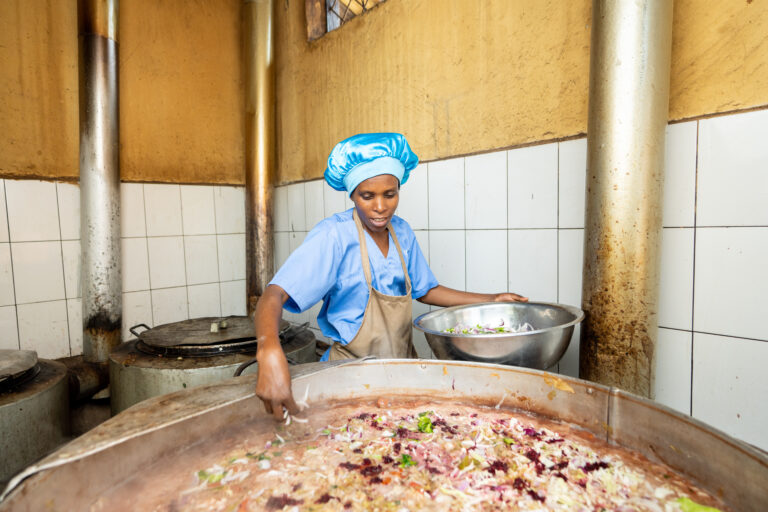
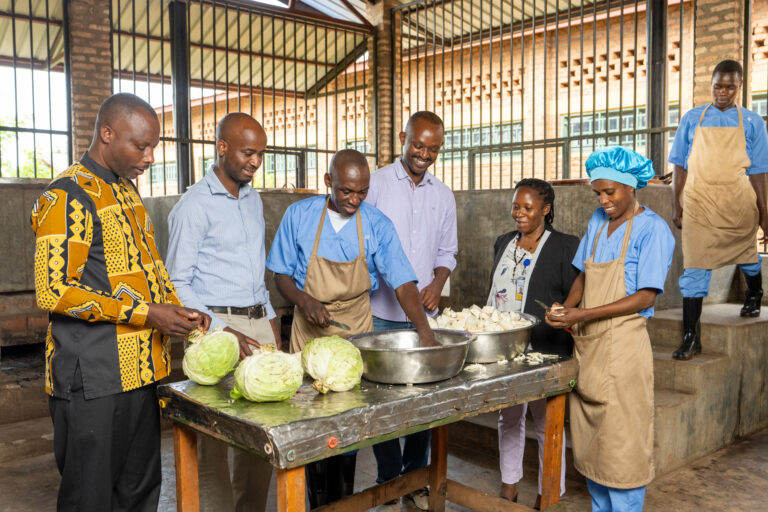
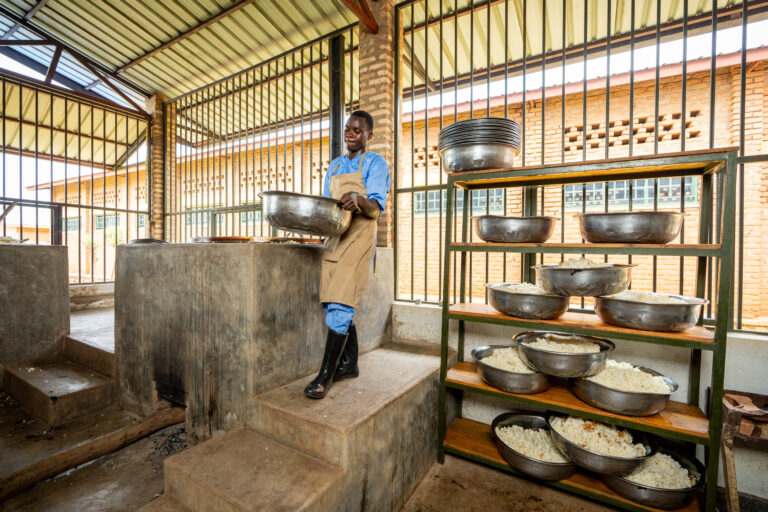
In the kitchen where cook Onesphore and his colleagues usually prepare lunch for the 2,800 pupils of Kabuga Catholic School, the headteacher of a neighbouring school today is examinig the large 500 liter pots filled with rice, beans and maize. What strikes him immediately: the air is clear, there is no coughing, no stinging eyes, and no danger from glowing-hot stoves. The kitchen feels safe, efficient — almost peaceful.
This visit is not unusual. Principals from surrounding schools regularly come to Kabuga to see the “smoke-free kitchen” and to witness what the benefits of cleaner cooking can mean for their owns schools.
Transforming the kitchen: less smoke, faster meals, and lower costs
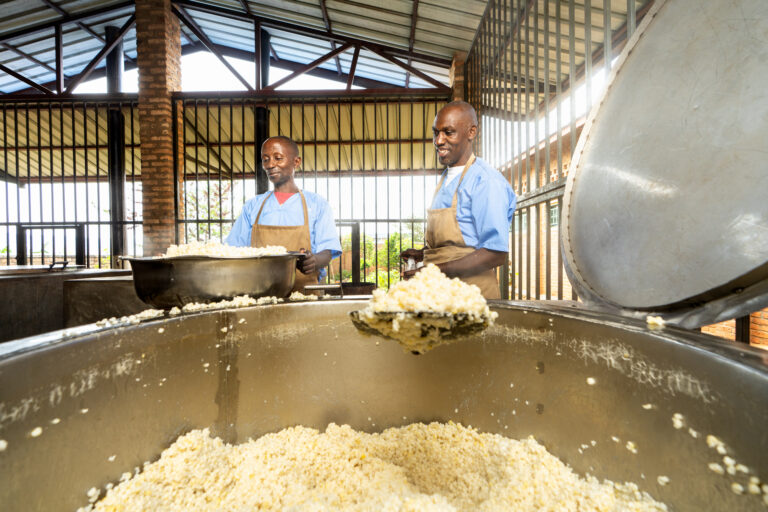
Kabuga’s kitchen is now safer, cleaner, and far more efficient. Firewood consumption dropped by around 55%, from 4 m³ to an average of 1.8 m³ per day, saving the school roughly 674 USD monthly. Cooking times have been reduced significantly, with Onesphore reporting a 40-minute decrease in boiling time. Most notably, the air quality in the kitchen has improved dramatically. “The smoke has reduced significantly, and we haven’t had any burn incidents since the new stoves were installed. We also use much less firewood now,” says Onesphore proudly. Another cook adds, “These stoves cook well. They don’t burn food, the meals stay warm after cooking, and there’s no smoky taste.”
Looking back: when cooking meant smoke, costs, and burns
It was not always like this in Kabuga’s kitchen. Before 2021, the kitchen at Kabuga Catholic School was a scene of constant smoke and intense heat. The school used to cook on large and bulky ‘Muvero’ stoves and open fires. Cook Onesphore recalls the thick smoke that filled the kitchen, leaving staff with watery eyes, persistent coughs, and painful burns from the hot metal surface of the Muvero stove or the open flames of the fires. The kitchen consumed about 4 m³ of firewood daily, costing the school over 1,200 USD per month – a significant strain on its budget.
Infobox: The Muvero Stove
- Design: Bulky metal stove with a simple fire chamber
- Fuel use and efficiency: The metal grate that holds the firewood burns out quickly and is rarely replaced, so wood is often burned with poor airflow, wasting fuel. The stove’s design also prevents complete burning, resulting in smoke and low efficiency.
- Health risks and safety hazards: Thick smoke causes coughing, watery eyes, and respiratory problems, while hot metal surfaces and open flames lead to frequent burns.
- Cost impact: High firewood consumption made school kitchens expensive to run
Change began when Kabuga was selected under EnDev’s Reducing Climate Impact of Cooking (ReCIC) project to become a demonstration and study site for institutional cooking. The goal? To reduce biomass consumption and harmful emissions and improve cooking efficiency.
Challenges & lessons: from Kabuga 1.0 to 2.0
The first step was the construction of a new, well-ventilated kitchen and the installation of two stoves, one 500 liters and one 1000 liters, known as Kabuga 1.0. The kitchen as well as the two stoves were built by EnDev – ReCIC project, in collaboration with the Jumelage Rhineland-Platinate. These stoves were designed to use less firewood, shorten cooking time, and reduce harmful smoke. But several challenges emerged: excessive heat cracked the pots, melted the metal grates, and heat loss around the pots made cooking inefficient.
The system was improved and re-engineered into Kabuga 2.0. The 1000 liter stove was replaced by the project with two new improved 500 liters models, giving the school three stoves in total. Internal vanes improved heat distribution, volcanic rocks replaced pumice stones in the combustion chamber, which are easier to replace if damaged. Finally, the kitchen staff received thorough training on how to operate and maintain the new stoves, and school acquired a scale to monitor fuel consumption more closely.
Kabuga: a model for schools across Rwanda
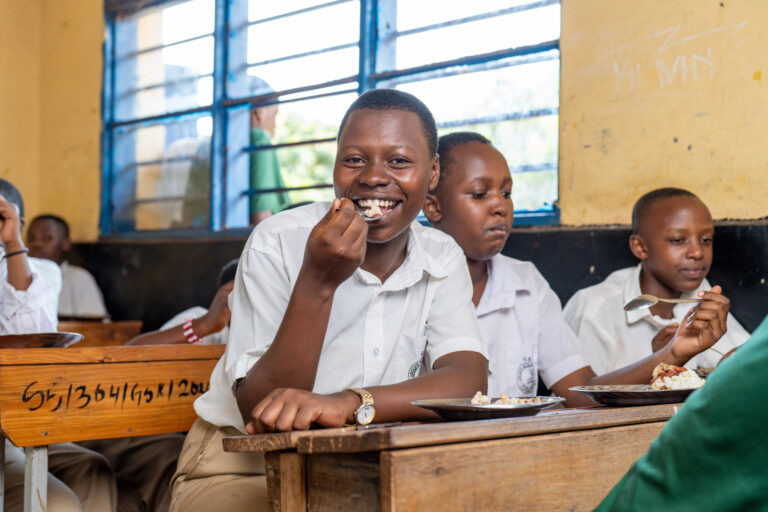
The transformation is already paying off at Kabuga. The money saved each month is now invested into better meals and has enabled the school to ease parents’ contributions, reducing the need for higher fees. But the story doesn’t end here. Kabuga has become a model for others and principals from neighboring schools regularly visit to see the now-famous “smoke-free kitchen”.
The school shows how clean cooking can improve health, protect the environment, strengthen family livelihoods, and create a better learning environment for students — proving that small changes can spark lasting impact far beyond a single campus. Most importantly, it demonstrates a scalable model that can be replicated in schools across the region, multiplying the benefits far beyond a single campus.
Infobox: The Kabuga Stove
- Design: fixed locally constructed stove made out of local materials such as fire bricks, cement, fire bricks and volcanic rocks, chimney, stainless steel pot
- Fuel use and efficiency: Improved airflow, durable grates, and controlled heat flow across the pot bottom enable more complete combustion and efficient heat transfer. As a result, the Kabuga stove uses less fuel and cooks more efficiently (Efficiency rate: 45% and Tier 4)
- Health risks and safety hazards: Smoke exposure is minimal due to good ventilation and a chimney, improving air quality and reducing respiratory irritation, while fully enclosed combustion and cool outer surfaces keep burn risks very low.
- Cost impact: Testing data show that the Kabuga stove uses 19% less fuel per student than the Muvero stove. In addition, critical parts are either long-lasting or easy to replace, reducing maintenance costs.
About the project:
The multi-donor partnership “Energising Development” (EnDev) is financed by the Federal Ministry for Economic Cooperation and Development (BMZ), the Dutch Ministry of Foreign Affairs (DGIS), the Norwegian Ministry of Foreign Affairs and the Norwegian Agency for Development Cooperation (NORAD), as well as the Swiss Agency for Development and Cooperation (SDC).
The development and modification of the “Kabuga stove” is part of the EnDev project “Reducing the Climate Impact of Cooking in Rwanda through Improved Cooking Energy Systems (ReCIC),” which is co-financed by the European Union under the “Global Climate Change Alliance Plus (GCCA+)” initiative.
EnDev sincerely appreciates and acknowledges the valuable contribution of the Rwanda Energy Group (REG) / Energy Development Corporation Ltd (EDCL) and the Energy Access and Quality Improvement Project (EAQIP) of the Worldbank to the successful completion of the Kabuga pilot project. Their support in making expertise available for refinement of the design, as well as their guidance in rebuilding and testing the institutional stove, has played a crucial role in achieving the project objectives.


