Rwanda
How shifting to a pro-poor approach accelerated energy access in Rwanda
Over the past decade, energy access in Rwanda has increased from one in five to more than four in five households. A key driver behind this transformation was EnDev’s results-based financing project taking on a ‘pro-poor’ approach. This has accelerated energy access for thousands of poor and vulnerable households across Rwanda – illuminating homes, powering small businesses, and changing lives. But what made this project markedly more successful was forging a strong partnership with the government, leveraging the lessons learned, and developing highly targeted, results-based incentives. This success culminated in 2021, when the Rwandan Government scaled up the approach with one simple goal: universal energy access.
Scaling nationwide energy access
In Rwanda, millions of lives have changed in just over a decade, as electrification has more than tripled since 2013. This rapid progress was possible because the government made off-grid energy a key part of its plan to bring universal access to the country’s 13 million people.
With support from the World Bank’s Renewable Energy Fund, the Rwandan Government has scaled up EnDev’s successful pro-poor approach to results-based financing (RBF) into a $30 million nationwide programme. A major driver of the project’s success has been the strong collaboration between EnDev and the Rwanda Energy Group – a government-owned holding company responsible for the country’s electricity supply chain – which has been involved in every step of the project’s implementation. This collaboration has fostered a culture of continuous learning and enabled effective scaling.
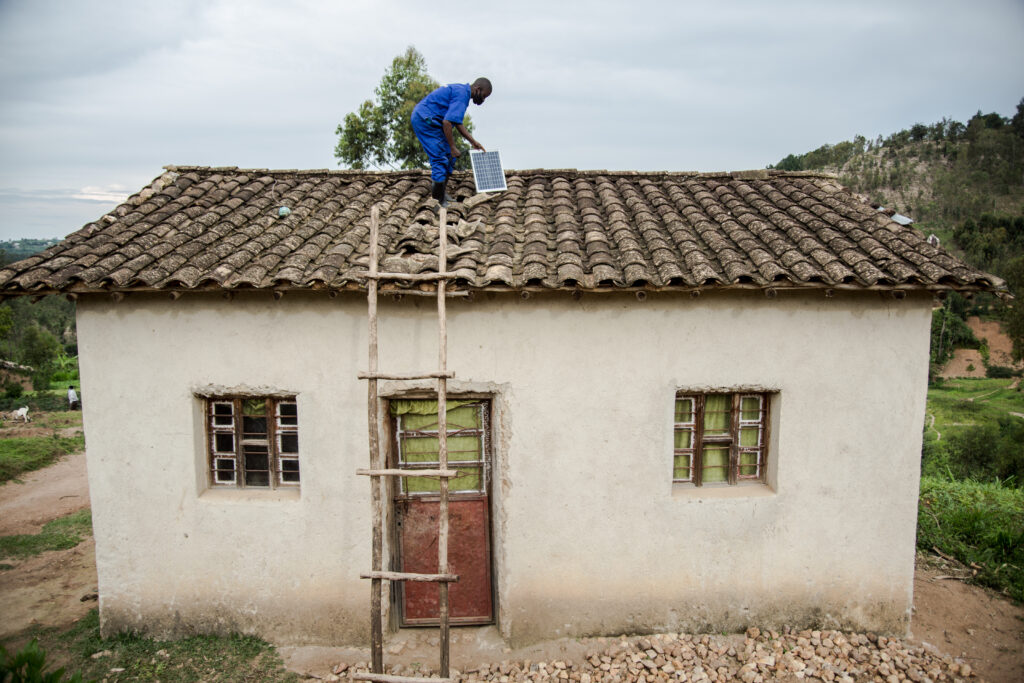
The government’s nationwide programme builds on two phases of EnDev work. In 2019, EnDev evolved its RBF project to include a ‘pro-poor’ approach, built around its commitment to leave no one behind. Implemented in partnership with the Rwanda Energy Group with USAID co-funding, EnDev started prioritising subsidies for solar home systems to accelerate access to electricity for low-income households in off-grid areas. At this time, only 36% of households had electricity access, and several regions were not expected to be connected to the national grid for the next 5 years. Five of these districts in the southern province were prioritised for implementation.
The power of socio-economic data
To ensure targeted support, EnDev used the Rwandan Government’s ‘Ubudehe’ categorisation system of household socio-economic welfare status to identify target households. As a result, households in selected districts in the Ubudehe 1 category, the lowest socio-economic group, received the highest demand-side subsidy of up to 87%. Between 2013 and 2019, during the earlier RBF phase without a specific pro-poor focus, households in Ubudehe 1 only made up .
Lighting the way
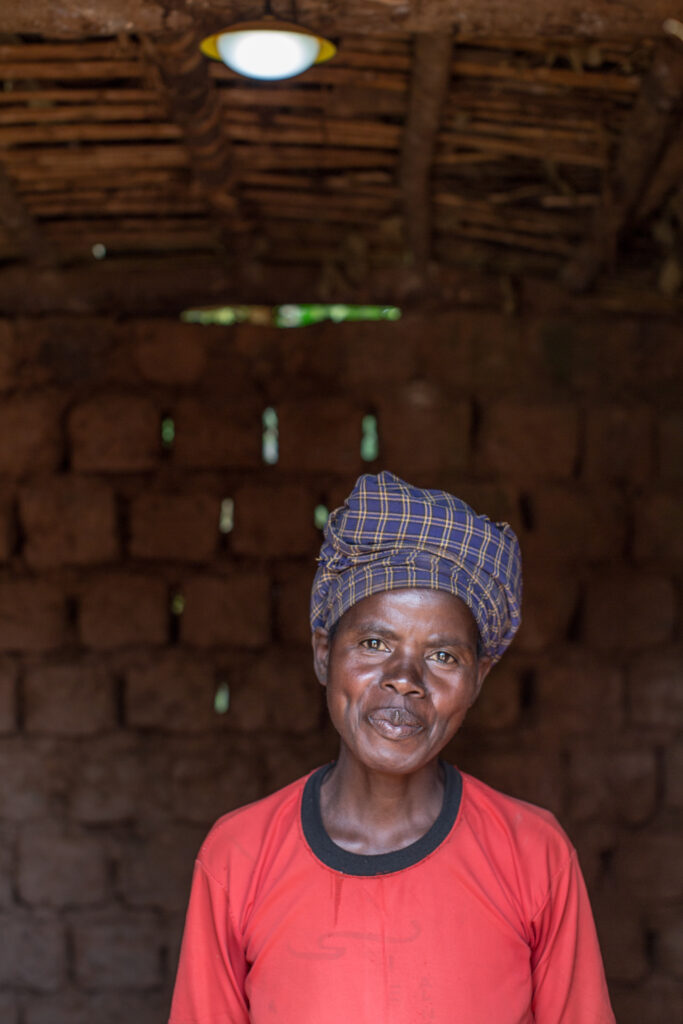
EnDev has been working in Rwanda since 2009 – but the approach to RBF has evolved along the way. Between 2013 and 2019, the focus was to help companies tackle market barriers, expand operations, and increase sales, supporting 11 local and international companies selling high-quality solar equipment. During this time, companies received incentives based on how much of a service the product provided per day. For example, the more light or electricity generated, the higher the incentive. This approach was initially very successful – 142,000 solar systems were sold, but sales started to taper off by mid-2018. At this point, companies had reached as many customers who could afford solar systems as they could, but almost 60% of households were still without access to electricity.
This is when EnDev transitioned to the pro-poor approach. The companies participating after 2019 still sold high-quality solar products, but this time at subsidised prices, passing the entire RBF incentive amount onto the consumer. This fine-tuning resulted in a dramatic, positive impact: another 33,000 systems were sold between 2019 and 2020 when the project closed.
Energy access markets are dynamic and continuously develop and shift, as do the needs of the companies and households. Subsidies may disrupt the market if they are not adjusted appropriately and in line with changing market conditions. Consequently, EnDev assessed market changes annually and fed the results into its RBF models. And once the pro-poor approach was implemented, the market picked up again, with new companies and products entering the field.
The right tool for the job
RBF projects are very data intensive, and robust digital systems are needed for managing claims and monitoring results. To support this, EnDev, in partnership with USAID Power Africa, supported the development of the Off Grid Monitoring Information System. It is a pioneering online information system for tracking off-grid electrification. The system consolidates electrification data from solar companies and mini-grid developers and provides analysis through a dashboard. The system was handed over to the government and is now owned and managed by the Energy Development Corporation Limited, a subsidiary of the Rwanda Energy Group. The tool was used to ensure companies only sell to eligible customers, it also tracked sales and budgets in real time, ensuring companies didn’t overstep their allocated incentive limits. In addition, the data was used to cross-check sales reported to the Rwanda Energy Group, providing an additional safety net in terms of verification and data quality. The government and World Bank are now using this innovative Off Grid Monitoring Information System in the nationwide programme, where it plays a significant role in the programme’s ongoing success.
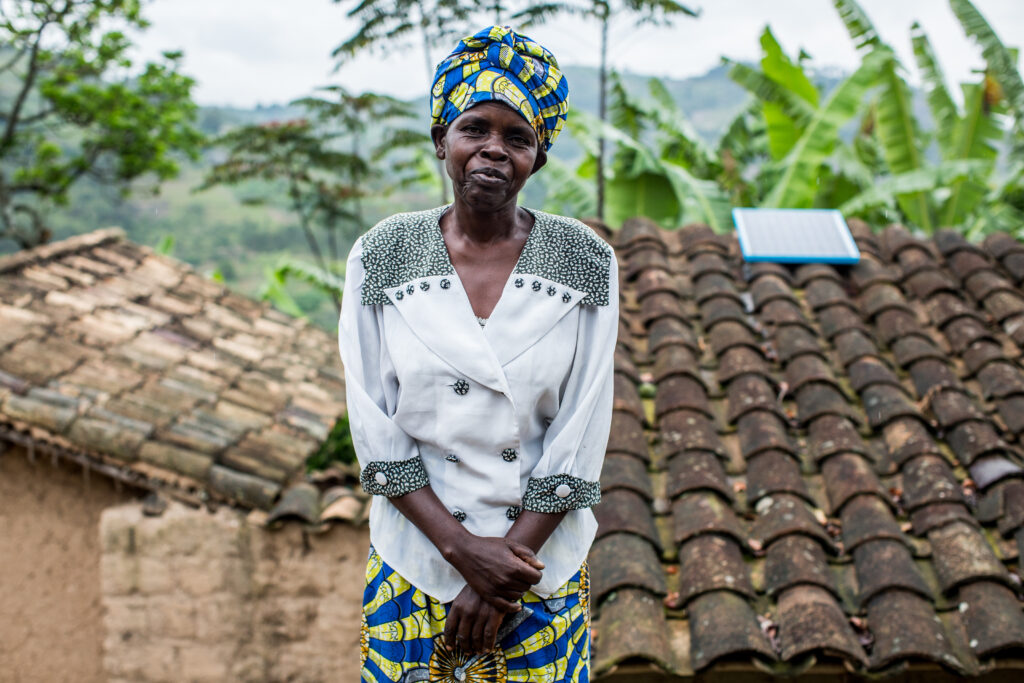
Throughout its journey, EnDev helped to position off-grid renewable energy as the best way to achieve universal energy access in Rwanda. Between 2013 and 2020, EnDev supported the sale of over 175,000 solar systems, enabling countless households to access modern energy. Shifting focus to a pro-poor approach didn’t just extend electricity to those left behind; it created a transformative framework for sustainable, inclusive growth. Through strategic partnerships, targeted incentives, and digital innovation, the success of this project offers a powerful example of how, with the right tools and data, reaching the poorest isn’t just possible, it’s a catalyst for national progress and resilience.
Key take-aways
Consider subsidy levels carefully and tailor them to the target group to minimise market distortion and create ownership and responsibility.
Energy access markets are dynamic, so reviewing the market annually is key to learning and adapting.
Prioritising the poorest households through a pro-poor approach ensures those most in need benefit and are not left behind.
Robust digital systems, like a tool to verify subsidy eligibility and to manage and monitor results, are vital for success.